Author Archives: thewhitespike

New Book

writeanne's avatarPut it in Writing

Out Now

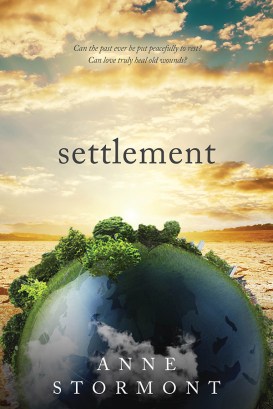
Yes, at last it’s here! My new novel Settlementis now available. It’s the book I never planned to write – the sequel to Displacement. I thought I’d told all of Rachel and Jack’s story but readers of Displacement told me no. They insisted there was more to tell. And they were right. So much so – I’m now planning the third and final – yes final – part of this unexpected trilogy.

And, although it’s a sequel, I’ve written it so it can be read as a standalone – but of course I’d love it if people read both.

I’ve thoroughly enjoyed spending more time with Rachel and Jack and their families and friends. I hadn’t realised how much I missed them and I can’t wait to get cracking on the final instalment.

So what’s it about?

Falling in love is the easy bit. Happy ever…

View original post 227 more words

Iris Murdoch

Under the Net
I have just finished Under the Net, the first novel by Iris Murdoch. It is the story of a lazy intellectual academic and boozer named Jake, who makes a living from translating, with a cast of characters, male and female, his friends Finn and Dave and his girlfriends or maybe lovers, or maybe objects of Jakes desires, two sisters Anna and Sadie, and Madge. At the start of the story, Madge, who he has been living with, along with Finn, throws him out of her house, as she is getting married to a bookie. So, begins the tale. And central to this tale there is Hugo, a big man, fireworks factory owner and head of a film company.
This is my first Iris Murdoch book. I remember when the film: Iris, came out there was a lot of talk in the media about her, I had only vaguely heard of, Iris Murdoch but, all the talk about how great a writer she was had me intrigued. I still haven’t watched the film, but I did see an exert from it with Jim Broadbent, as Iris’ husband, telling Judy Dench as Iris, suffering from the horrible disease of Alzheimer’s, what she did, when she couldn’t remember about her work, he tells her about all the wonderful books she had written. A heart-breaking scene. My wife Kathy worked in the field of Alzheimer’s and has studded at The Iris Murdoch centre for the disease in Stirling. So, Iris began to work her way into my conciseness and with a brilliant Twitter account that puts out regular quotes from her books I felt it was time for me to try one of her novels and to begin at the start, her first book, Under the Net.
Under the Net is a brilliant story, there is a lot of philosophical passages throughout the whole narrative and I remember reading a terrific book: At the Existentialist Café by Sarah Bakewell. It is a history of Philosophy – that doesn’t do it any justice at all and I may write about that one day – in it she mentions that Iris Murdoch wrote a biography on Jean-Paul Sartre, one more push to get me on the path to reading her novels. This book is also a great London novel and it is hard to believe that it came out in 1954, it’s so fresh. The only tell-tale signs are the pub opening and closing times. There is also a short detour into Paris, which is so descriptive, I think she must have loved Paris as much as she loved London. With Jakes acquisition of The Marvellous Mr Mars, a canine movie star and Mrs Tinckham and all her cats, I thoroughly enjoyed this book and read it in quick time, it was so easy to read, and I was sad when it finished. Sometimes, and I have heard a lot of people saying this, when you finish an enjoyable book, you don’t know where your next good one will come from well, now I know who to turn to.

Winter

In the past year or so I have been neglecting my Shakespeare journey, only the odd glance and a lot of guilt, my reputation as a Shakespearian shot to pieces. Then; The Royal Lyceum, just before Christmas, announced they will be performing: The Winter’s Tale, in the New Year. I haven’t seen a performance of this play nor have I read it so I am very excited and looking forward to it immensely. I started reading, from my copy of the complete works, The Winter’s Tale between Christmas and the New Year. There are no notes or guidelines with the complete works, just the raw play, so I have had to take my time, going back and re reading long passages to make sure I have a good grasp of the story.
In the complete works: The Winter’s Tale, is proceeded by Cymbeline and is followed by The Tempest, these are amongst the latter plays of Shakespeare. Doing my research online, Wikipedia, it says that it is one of (the problem plays) because the first three acts are filed with “intense phycological drama” and the last two acts are quite comedic. I must admit, I really did struggle with the beginning, not all of those first three acts, maybe one and a half. I could have done with some help, I did look in my local Waterston’s for a copy of the play by Arden or Oxford but, to no avail. I could have bought half a dozen Macbeth’s but, that’s probably because I live in Scotland, we seem to like it up here, I must admit I do love it too I have read it and saw it performed quite a few times, unlike The Winter’s Tale, which is brand new to me.
Now that I have finished reading the play though I haven’t been to see it yet I am not sure if I don’t agree with it being a problem play. The way it brings in “Gentlemen” to round of the story was a bit frustrating for me. It felt as if it was, not so much tying up loose ends as, spelling it out to us. This may be way off and once I have been to watch the play it may make more sense.
This post could be part one in a series about The Winter’s Tale. After I see it, my eyes and mind may be opened to the wonder and beauty of a late masterpiece. After all that is what happened with Hamlet, I didn’t find the play very inspiring when I first read it, then I bought and watched the DVD with David Tenant and was enthralled with it, re-read it went to see it performed on stage and at the cinema. Now, I love it so much.
A little post script here, just to get me over the five hundred words mark. This has been a good exercise, reading and getting to know The Winter’s Tale. It may not be very good, my post I mean, or all that informative but, it has managed to push me back onto the road of my Shakespeare journey. I know that’s corny but look at the word count. Words don’t always flow.

Reflections on a Writing Conference

writeanne's avatarPut it in Writing

I spent last weekend at the annual Scottish Association of Writers (SAW) Conference, and, as always it was an enjoyable couple of days.

It was held, as it has been for the last few years, in the lovely Westerwood Hotel in Cumbernauld near Glasgow. And the hotel staff along with the amazingly hard-working, volunteer members of the SAW council ensured the whole thing ran very smoothly.

There were a variety of workshops to choose from and I went to three:

SELF-PUBLISHED FROM MANUSCRIPT TO MARKET – this was led by the director of an assisted and highly reputable publishing company. It was a good overview of the process of self-publishing but understandably he took the view that an author going completely alone couldn’t do as good a job as would be done by a company like his. But although I didn’t agree with everything he said, I did find the…

View original post 282 more words

26 Books in 2017 Book 20: A Book That Has Been Translated

writeanne's avatarPut it in Writing

The Millennium Trilogy by Steig Larsson.

Unlike most of the other books in this challenge, number 20 was an easy choice and came to mind immediately. Originally written in Swedish and subsequently translated into English (the language in which I read them), this dark, psychological, crime thriller trilogy ranks amongst my most favourite ever reads.

Okay it’s three books but to me they’re very much a unit. The set consists of:

  • The Girl With The Dragon Tattoo (2005)
  • The Girl Who Played With Fire (2006)
  • The Girl Who Kicked The Hornet’s Nest (2007)

The translator is Reg Keeland for publisher MacLehose/Quercus

For me these novels were compulsive reading. The main characters in all three books are Lisbeth Salander – a damaged, feisty, feminist, techie fighter for justice, and Mikael Blomkvist – an investigative journalist – and they are a totally beguiling partnership. The stories are intriguing, shocking and completely gripping.

View original post 36 more words

A Biography of Story


A Biography of Storywp-1490647474285.jpg

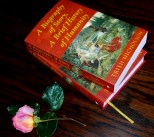
I am not a great lover of nonfiction books, I do love history and the odd travel book but, when I saw Trish Nicholson was publishing another book, I immediately pre-ordered it from the web site. With some strange quirk, I got this splendid tome at least two months early. The full title is: A Biography of Story: A Brief History of Humanity.

The book, or should I say Story, for it is sort of she who narrates this adventure, starts of at the beginning of mankind, with cave drawings and the short stories of early civilizations from all round the world, Australian Aboriginals, to Indian Temples. She writes about places and cultures with an expertise of an Academic, which she is but, written with an ease so kind to the eye and easy to read.

I love the short stories throughout the book, all surrounded by Nicholson’s wonderful prose. Her own love for the short story comes through on every page. And as she brings the narrative up to the modern age and wonders about Story’s future, in this digital world, you realize how much the written word of storytelling has evolved throughout the centuries and how much they mean to the author, Story.

She must have exhaustingly researched this book but it seems as if she just sat down at the typewriter and wrote it off the top of her head. I have read a few of Trish Nicholson’s books and they are all wonderfully written, from travel books to books on how to improve your writing. She doesn’t dumb down neither does she put on needless flourishes, when you read her books, you are in good company.

The Western World 2

Great writing from Adrian Tinniswood.

englishcountryhouses's avatarAdrian Tinniswood

1905-john-millington-synge-2 John Millington Synge

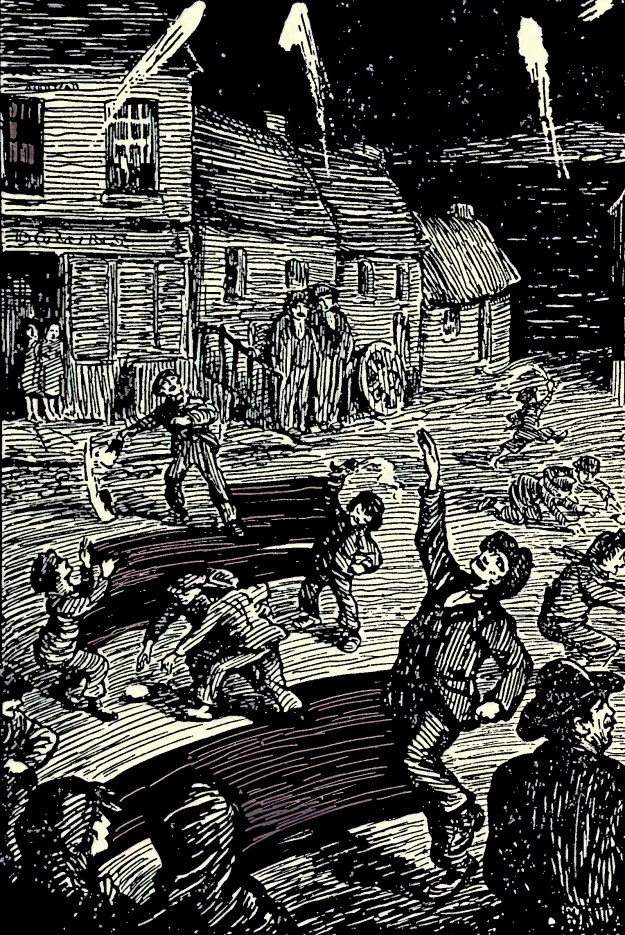
Synge got three Guardian articles out of Erris, each illustrated with one of Jack Yeats’ oddly haunting drawings of thatched cabins, empty roads and half-formed faces. One day, they drove to the village of Geesala and walked out along the edge of Blacksod Bay until they came to the hamlet of Dooyork. The houses they saw were poor and primitive, ‘broken-down hovels of the worst kind’. People stared from their doorways as they walked by. Women passed them bringing in heaps of seaweed or turf in great panniers slung across horses, often with a toddler perched on top.

They got back to Belmullet to find Carter Square heaving with humanity. It was Friday 23 June, the eve of the Feast of St John the Baptist, and as the sun went down bonfires were being lit all over the west of Ireland. ‘A relic of Druidical rites’, according…

View original post 696 more words

The Western World 1

englishcountryhouses's avatarAdrian Tinniswood

Jack Yeats.jpg

It is late. The square is full of flaring fire and people.

In the falling midsummer light of a St John’s Eve crowds laugh and gasp at the antics of the boys as they hurl flaming paraffin-soaked sods of turf high into the sky, catching them and throwing them up over and again, leaping over bonfires, colliding with each other, swinging lengths of burning hay-rope around their heads. A child, caught in an ecstasy of pleasure and dread, reaches out unthinking to clutch the hand of a tall man, who just as unthinking returns its grip. This unlikely couple, who have never met before and will never meet again, stand close together, holding hands, until the fire play is done. Then the little girl vanishes back into the crowd and the half-light.

*

On any day, Carter Square in Belmullet is a mass of moving metal. Cars and 4x4s, camper…

View original post 516 more words

Leda

The Last Days of Leda Grey

This latest novel from, Essie Fox is in the tradition of her other novels, The Somnambulist, Elijah’s Mermaid and The Goddess and The Thief, three individual wonderfully written books, based in the Victorian era. The Last Days of Leda Grey, is a bit different, it’s not based in that period but, Fox has shifted her attention to one long hot summer in the mid seventies and going back in time to the Edwardian era and to the early days of silent films.

Ed, is a hip young journalist, working for a trendy London magazine. We learn he has had a troubled past and is a bit wasted from too much excess from a life in Fleet Street. While in the “Brightland” lanes, he comes across a little shop selling all kinds of hippy and occult paraphernalia, he sees a photo of Bette Davis and on a whim, because it reminds him of his mother, he goes into the shop. The proprietor is an old man, a bit shabby with a Bobby Charlton comb over. As Ed looks round the shop he sees some monochrome pictures of a dark-haired beauty. He is captivated by her and when the old man tells him she is still alive, he decides to track her down, thinking there could be a story in it for his magazine.

I thought this book was fantastic, I’m not great at writing reviews and only do it when something moves me, something I’ve really enjoyed. I read this book very quickly, it just flows along on the page, the writing is rich and descriptive, I like how great writers do that and it was so clever how Fox, made a kind of parallel universe in the town of Brightland, reminded me a bit of Lyra’s Oxford, in Philip Pullmans, His Dark Materials books. When I started to write this, I had to skimm through the book to help jog my memory and was once again, struck  by the wonderful writing of Essie Fox. All the characters are fascinating and well-drawn. Her locations make you feel as if you are in them, with the claustrophobia of the Brightland Lanes shop, to the mysterious shed. The house on the cliff, with its run-down rooms, like an old mausoleum. Every page is a Gothic painting of words.

Surreal Encounters at the Festival

Surreal Encounters.

The Edinburgh Festival is over for another year; amongst all the comedy acts and fringe madness, there was also a couple of art exhibitions, one at the Scottish National Gallery, on Princess Street and another one at The Scottish National Gallery of Modern Art, just over the Deans bridge. I have been to both but this post will be about the second one, I may write about the first one, Inspiring Impressionism: Daubigny, Monet and Van Gogh, if I find the time. It is a fantastic exhibition and if you are going to Edinburgh, soon! I highly recommend it.

When the Festival comes around I always look for Shakespeare in the mix. In the past I have been lucky to see Kenneth Branagh and his Renaissance company productions of King Lear and A Midsummer Night’s Dream, staged in the Kings Theater back in the late eighties. That was amazing and, pretty much led to my total love of Shakespeare. I have managed to see one or two fantastic, independent plays on the Festival Fringe, my favourite being a post-apocalyptic: A Midsummer Night’s Dream but, this year I didn’t spot any.

The Surreal Encounters exhibition is spread out over nine or ten spaces; right at the start in the first part, the corridor actually, there to my delight, are some small pieces by Picasso, we are in for a treat here. The Encounters part of the exhibition refers to four collectors, five if you count the husband and wife, Ulla and Heiner Pietzsch. The other three are Edward James, Roland Penrose and Gabrielle Keiller. I knew of Penrose, he was married to the photographer Lee Miller and was a great friend of Picasso. He was a major promoter and collector of modern art; he was also an artist in his own right, with some of his work on display in this exhibition. The other individuals, collectors of surreal artwork, I was not so familiar with, Gabrielle Keiller who bequeathed her art collection to The Scottish National Gallery of Modern Art was a top ladies golfer, who fell in love with surreal art later in life. I hope l will get around to reading about them more extensively later, I will probably invest in the accompanying book for the exhibition, it is twenty-two pounds and is a bit of a door step, I didn’t fancy carrying it around Edinburgh with me all day.

The work on display are fantastic, there is a big section on Dali, some wonderful pieces including his: The May West Lips Sofa. I have been to see Dali’s: Christ of Saint John of the Cross, at the Kelvingrove gallery in Glasgow, many times, it is stunning. Seeing these works on display in Edinburgh has more than helped reinforced my enthusiasm for Salvador Dali. With paintings by Picasso, Joan Miro, photographs by Man Ray, great paintings by Max Ernst, Rene Magritte and Alberto Giacometti. This was a very impressive Exhibition, from a wonderful and, very conveniently close Gallery.

Post Script: This exhibition finishes today Sunday 11th of September 2016.